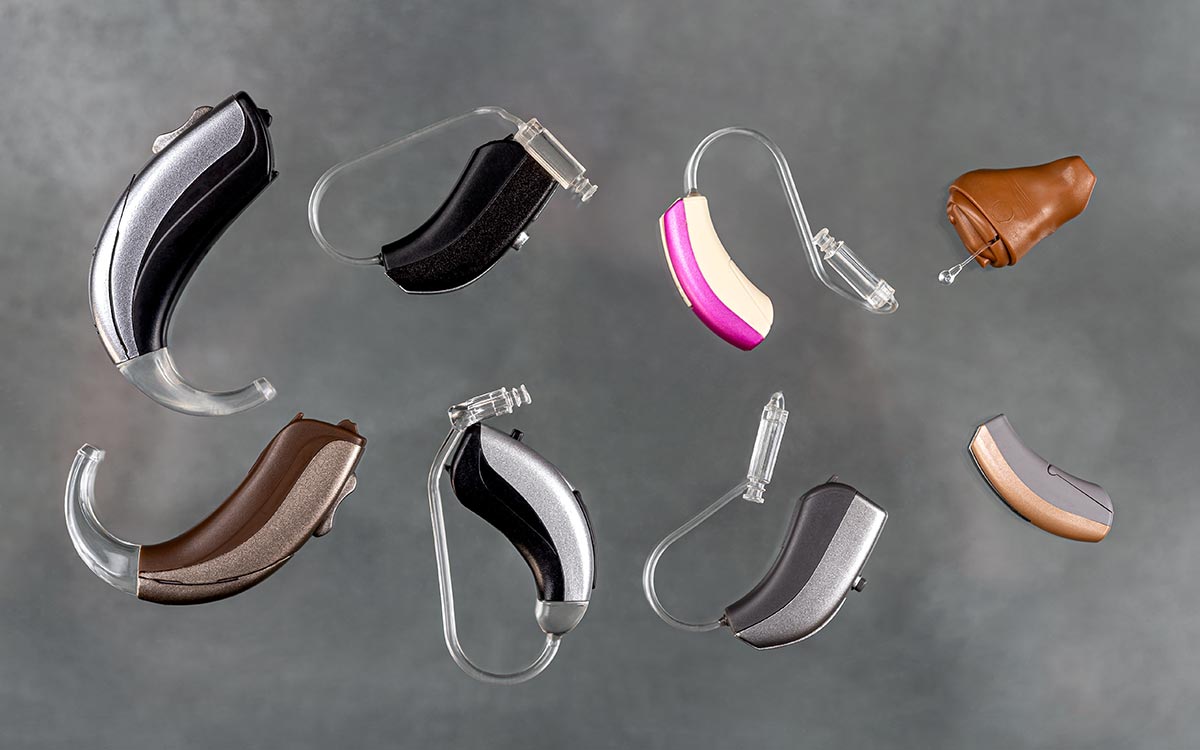
The total volume of hearing aid designs and technology levels on the market today can make the selection process feel complicated. Fortunately, there is an ideal hearing solution for every person, regardless of their lifestyle or the severity of their hearing loss. Success lies in finding the specific aid that meets your personal preferences.
Gaining an accurate understanding of common hearing aid categories will empower you to make an educated decision for your hearing health. Today, we’re breaking down the various hearing aid styles and what makes each one unique.
The ITC (In-the-Canal) Style Detailed
Basic Overview:
These hearing aids are placed partly inside the canal, making them visible only slightly from the outside.
The Advantages:
- Provides an understated appearance compared to traditional styles
- Specifically shaped to the wearer’s ear for a better fit
- Works well for individuals experiencing mild hearing challenges
These devices are commonly recommended for novices due to their effective mix of subtle design and user-friendly functions.
Exploring IIC (Invisible-in-Canal) Options
Core Traits:
As the most compact custom option, IIC aids represent the smallest available style. This style rests deep in the ear for an entirely covert appearance.
Why they are favored:
- The best option for users prioritizing appearance
- Pure sound quality due to mic placement
- So light and small that users often don’t notice they are wearing them
IIC devices are primarily targeted at patients with moderate hearing needs who want their technology to remain completely unnoticed.
Full and Partial ITE Varieties
The Basics:
ITE devices are built to stay in the outer ear area, offering two different shell sizes based on your anatomy. They are custom-made to match the shape of your ear.
Value Offering:
- The increased surface space provides space for extra functionality and extended power
- Easier to manage for those with dexterity challenges
- An adaptable choice that can address even significant levels of hearing loss
The all-in-one nature of the ITE design makes it a favorite for those who dislike behind-the-ear equipment.
Exploring BTE (Behind-the-Ear) Styles
Summary:
An external hearing aid is worn externally behind the ear for a stable fit. Audio moves into the ear canal through a small tube or custom earmold.
Reasons for Choosing:
- Regarded as one of the most reliable and sturdy designs available
- Can be set to assist users with everything from mild to profound loss
- Provide space for advanced features and rechargeable batteries
For those who prioritize a dependable device that is easy to manage and provides plenty of volume, BTE is a top choice.
Receiver-in-Canal (RIC) Hearing Aids
Mechanical Arrangement:
The RIC style keeps the main body behind the ear while moving the receiver into the ear canal itself.
Why users select them:
- Very organic sound quality
- Users appreciate the slim profile and comfortable fit for all-day use
- RIC technology is highly flexible for many different audiogram profiles.
The combination of style and high-end functionality makes RIC models a top choice in the modern market.
Understanding Long-Term Solutions
What they represent:
These devices are placed deep in the ear canal by an audiology professional and can stay in place for several weeks at a time.
Why people select them:
- Perfect for wearers who want to avoid the routine of handling hearing aids daily
- They are virtually hard for people to notice because of their depth
- You can go about your whole life—including sports and rest—while wearing them
If you want an auditory solution that requires zero daily thought, the extended-wear style is perfect.
Wireless Smart Syncing
Tech Specs:
These are modern devices fitted with radio technology to sync with your personal electronics and televisions.
Digital Advantages:
- Turn your hearing aids into wireless headphones for all your favorite audio
- Allows for instant, subtle adjustments to your hearing aids through digital software
- Enhances everyday life by making technology engagement seamless and clear
Bluetooth options are accessible across many styles, including RIC, BTE, and some ITC models.
Surgically Placed Middle-Ear Systems
Technical Description:
Middle-ear implants are specialized instruments that employ mechanical vibration to enhance hearing via the middle ear.
Medical Reasons:
- Provides a solution for individuals with anatomy that prevents the use of conventional aids
- This is a specialized alternative for those with chronic ear canal sensitivity.
An exhaustive consultation with an ENT professional is necessary before considering a middle-ear implant.
Finding the Hearing Aid That Fits Your Life
There is no single “best” hearing aid; rather, there is a best one for you, determined by your medical needs and personal comfort. An audiology professional is your best asset for comparing these options and finding a match for your daily routine.
If you’re ready to explore the possibilities, schedule an auditory evaluation today. It’s a great first step toward better hearing and more confident communication every day.
Sources:
https://www.mayoclinic.org/diseases-conditions/hearing-loss/in-depth/hearing-aids/art-
20044116
https://www.hearinglife.com/hearing-aids/types
https://www.nidcd.nih.gov/health/hearing-aids