When your hearing feels dampened, it can interfere with your daily routine and leave you feeling withdrawn from your surroundings. It is typical to presume that muted sound indicates long-term hearing impairment, but the issue is often just a resolvable cerumen obstruction.
Recognizing how to tell these two conditions apart ensures you seek the correct care, whether that is safe wax removal or a diagnostic hearing test. In the event you are experiencing muffled hearing, remain calm. A clinical assessment will deliver the definitive answer, but the following guide outlines the primary differences between blockage-based issues and permanent loss.
How to Recognize a Wax Blockage
Your ears produce wax as a natural defense mechanism to preserve integrity and keep debris away from the tympanic membrane. The trouble starts when this material accumulates to the point of a physical obstruction.
Symptoms of a clog often feature:
- Dampened sound quality that occurs gradually or overnight
- A feeling of ear pressure or a “clogged” feeling
- Ear discomfort or mild pain
- Localized tinnitus within the impacted ear
- Hearing that clears briefly after yawning or eating
A hallmark of blockage-based sound changes is asymmetry, typically affecting one side over the other. Fortunately, clearing the obstruction generally clears the symptoms immediately.
Recognizing Permanent Impairment Symptoms
Permanent hearing changes, often triggered by age or noise exposure, are gradual and remain even if the ear is perfectly clean.
Indications of permanent hearing loss often feature:
- Battling to track discourse when background noise is present
- Often needing clarification during everyday dialogue
- A habit to increase audio volume notably to compensate for hearing loss
- Diminished sensitivity to higher-pitched sound input
- Two-sided hearing changes that affect both ear canals simultaneously
Importantly, hearing impairment is a clarity concern that rarely includes the perception of physical fullness found with cerumen.
At-a-Glance: Cerumen vs. Auditory Decline
While evaluating earwax buildup vs. auditory impairment, a handful of indicators can help guide you in the correct path:
- Timeline: Cerumen dampening can be quick, but permanent loss requires decades
- Duration: Cerumen issues are treatable and temporary, whereas impairment is typically long-term
- Markers: Pressure suggests a blockage; struggling with word precision suggests decline
- Laterality: Wax often impacts one ear; hearing loss commonly affects each
The Risks of DIY Cerumen Removal
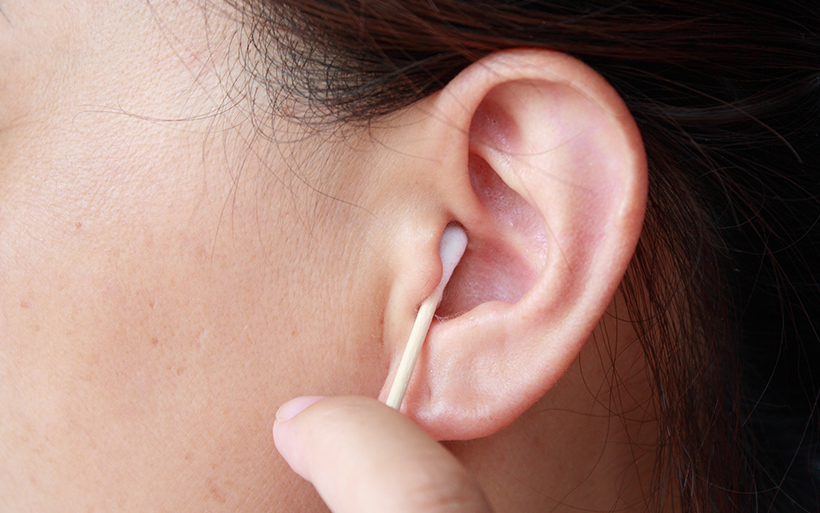
Many people make the mistake of attempting to clear a suspected blockage manually using probes or household tools. In truth, manual poking often compacts the cerumen deeper against the tympanic membrane, making the situation more severe.
Medical research shows that DIY removal often leads to accidental injury or increasingly complex blockages.
In the same way, ignoring early hearing loss can postpone care that helps in preserving communication, safety, and well-being.
The Importance of a Professional Otoscopy
A specialist can employ an otoscope to immediately see if a physical obstruction is visible.
If cerumen is found, clinical removal often resolves signs on the spot.
When the ear is unobstructed but auditory input remains muffled, a clinical assessment is required to audit your auditory health.
Health authorities advise obtaining a clinical evaluation as promptly as you notice auditory changes that impact your routine.
Determining Earwax Blockage or Auditory Decline?
Feeling as if auditory signals are muted doesn’t always signify a permanent change.
Frequently, the problem is merely an accumulation of cerumen that can be quickly cleared.
A professional assessment will provide you with the answers you require to move forward without worry.
Remember: The sole reliable way to tell the difference between earwax buildup and auditory impairment is with a clinical evaluation.
Addressing the concern now halts the stress of the unknown and places you on the track to better hearing.
If your auditory sense feels diminished, avoid guesswork. A quick check can make all the difference, so reach out to our team of specialists right now.